High-margin salon cosmetics: selling without burning out
Which cosmetic ranges really pay off in a salon? A hands-on analysis of high-margin products, from treatment-room advice to retail.

After fifteen years working in treatment rooms, I can tell you one thing: the scent of a spa is much more than marketing. It's what remains after the client walks through the door. Even before touch, before the music. A spa's olfactory universe is that invisible signature that transforms an ordinary treatment into a sensory memory. But in practice, building this universe requires consistency. Not just diffusing any fragrance.
A spa's olfactory universe cannot be improvised. I have seen too many establishments multiply scents without a common thread. A vanilla oil in the treatment room, a lavender diffuser at reception, citrus candles in the boutique. The result? Sensory confusion.
Consistency begins with a clear choice of olfactory family. Oriental floral, spicy woody, marine vegetal. One direction. Then, this direction is adapted to the spaces and protocols.
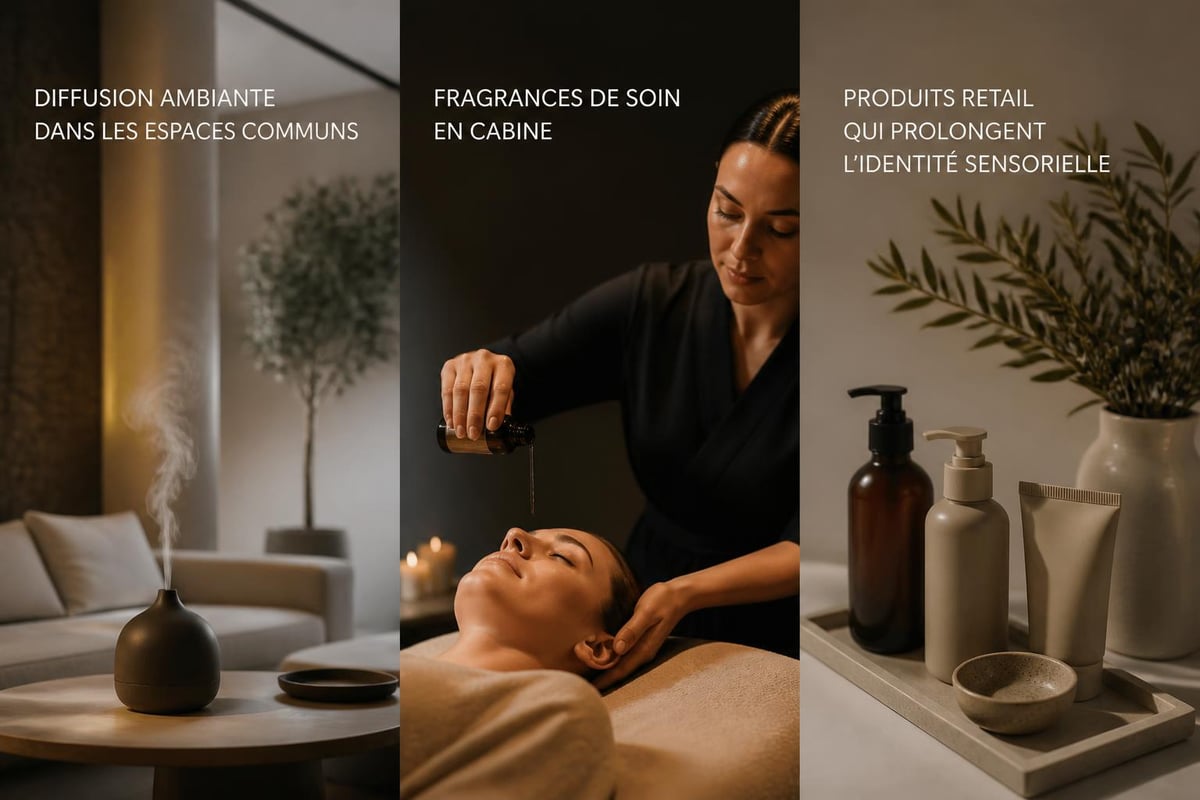
In practice, I always structure a spa's olfactory universe on three levels:
These three levels must communicate. Not necessarily with the same fragrance, but with a recognizable olfactory kinship. That is what creates the signature.
Reception never smells like a massage room. Pure business logic. At reception, we look for a welcoming but discreet note. Often light citrus, white tea, sometimes a little fig. Scents that build confidence without overwhelming.
In the treatment room, it is different. The fragrance must hold up in the heat and withstand steam if you have a hammam next door. Highly volatile essential oils evaporate too quickly. Choosing the ideal fragrance for your massage oil then becomes a real technical criterion.
| Zone | Recommended Family | Desired Effect | Example Note |
|---|---|---|---|
| Reception | Citrus, tea, fig | Welcoming freshness | Bergamot, yuzu |
| Massage room | Oriental floral, woody | Enveloping, relaxation | Orchid, sandalwood |
| Hammam/sauna | Marine, eucalyptus | Purification, breathing | Pine, sweet mint |
| Boutique | Light signature accord | Memorization, desire | Vanilla, white musk |
Companies like Sensaulia or Daena have specialized in this custom olfactory mapping. In practice, it costs money, but for high-end establishments, the investment is justified.
Throughout my career, I have always considered massage oil to be the heart of the spa's olfactory universe. It is what stays on the skin the longest. It is what the client smells when they return home.
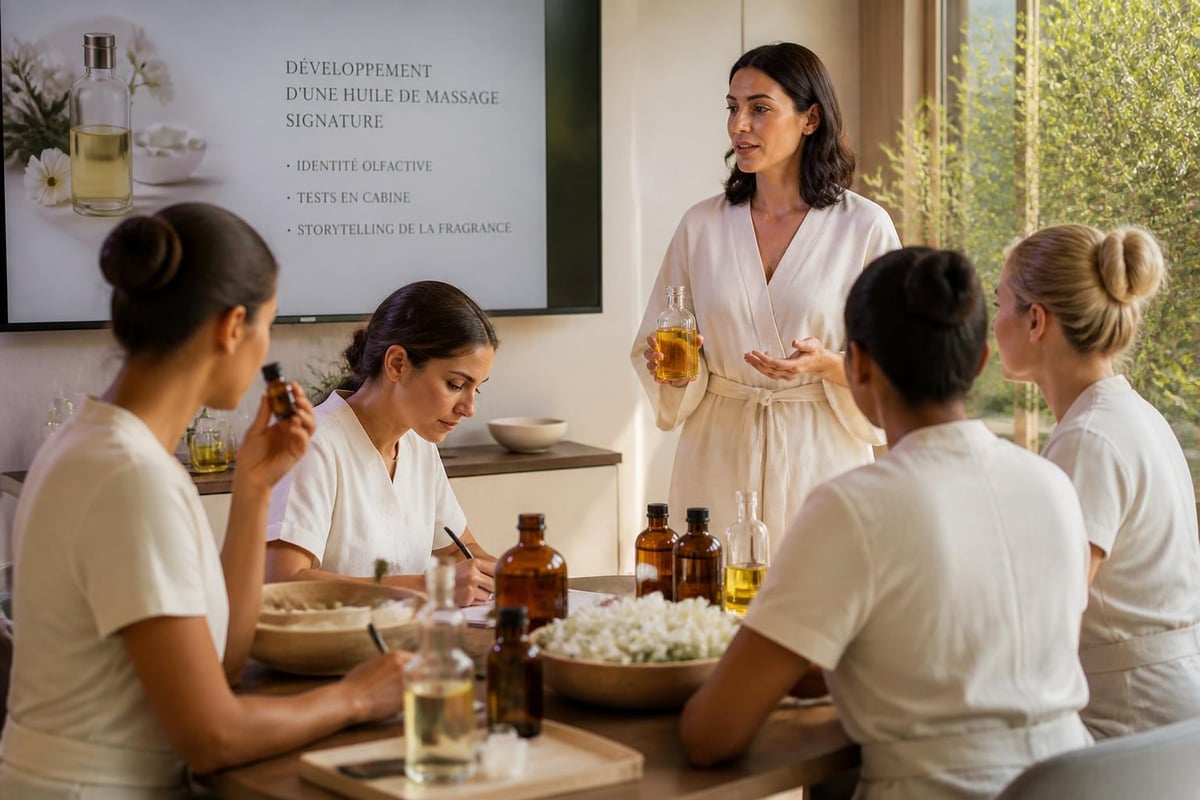
A signature oil is your identity in a bottle. There is no need for ten references. One or two truly crafted oils are enough. Texture matters as much as the scent. An oil that is too greasy with a sublime fragrance is a failed protocol.
I always favor high-quality plant bases: macadamia, jojoba, apricot kernel. They glide well, absorb gradually, and carry the fragrances without altering them. The Precious Orchid Signature Oil perfectly illustrates this approach: an olfactory ballet that begins floral and light, then evolves into sweet and gourmand notes, creating a true sensory narrative in the treatment room.
Developing a signature massage oil takes time. At least six months between the brief and its introduction into the treatment room. But that is what differentiates an ordinary spa from a memorable establishment.
Olfactory marketing sounds technical. In practice, it is mostly common sense. Diffusers adapted to your volumes. No over-diffusion that saturates the air. An intensity that respects the client's journey.
I have tested different systems: ultrasonic diffusers, cold-air diffusers, programmable nebulizers. Each has its advantages. For a small institute, natural reeds are enough. For a resort, professional olfactory marketing solutions are essential.
Consistency matters. Your spa's olfactory universe must be constant. A client who returns three months later must find exactly the same atmosphere. It is reassuring. It builds loyalty.
I have made my mistakes. You can avoid them. Multiplying fragrances remains the number one mistake. Three references maximum for ambient diffusion. Otherwise, it is cacophony.
Another trap: copying a competitor's universe. Clients can smell the imitation. It is better to have a modest but authentic identity than a copy of a major Parisian spa. Organic and natural cosmetics fit into this approach of authenticity.
Never neglect ventilation. A confined olfactory universe becomes sickening. The air must circulate, and the scents must be gently renewed.
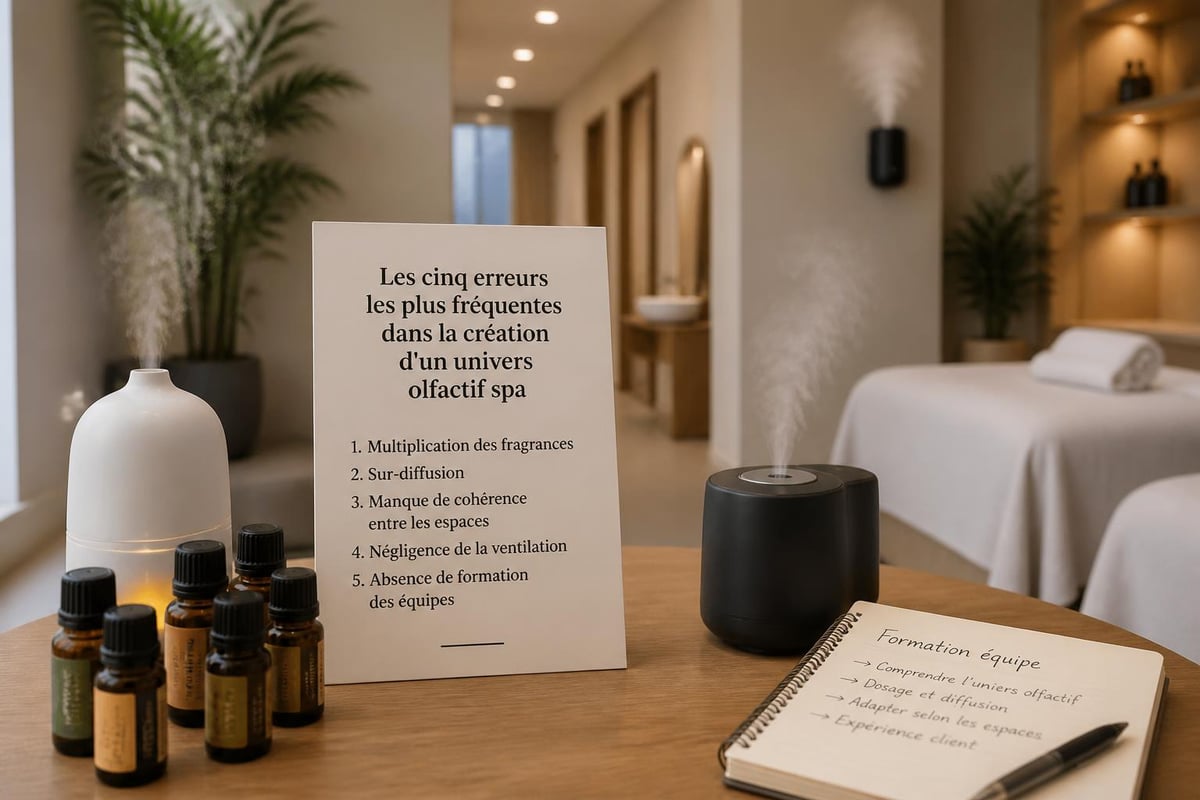
Your estheticians must know how to talk about your fragrances. Not with perfumer jargon. With simple words, emotions, images. "This oil evokes an Asian garden in spring, between floral sweetness and spicy warmth."
I always organize olfactory training sessions. We smell blindly. We describe. We associate memories. It creates a common culture. And in the treatment room, it changes everything. The client feels that we master our subject.
The vocabulary must remain accessible but precise:
Simple concepts that allow you to tell an olfactory journey without pedantry.
It is difficult to quantify precisely. But certain indicators speak for themselves: the repurchase rate of oils in the boutique, spontaneous mentions in client reviews, requests from clients who "want to find that smell again".
I also look at behavior in the treatment room. A client who breathes deeply, who asks for the name of the fragrance, is a good sign. The sensory identity of an establishment is built in these micro-moments.
Establishments like UNIVERSPA have understood that olfactory is no longer optional. It is structural. It is what transforms a treatment into a ritual.
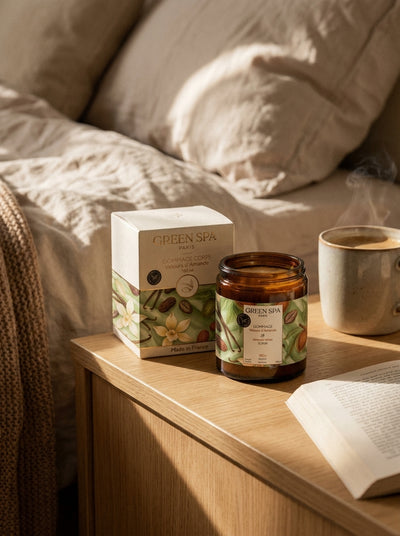
The spa's olfactory universe remains a powerful lever for differentiation, provided it is built with method and authenticity. Consistency of fragrances, quality of raw materials, training of teams: every detail counts to create a true sensory signature. If you are looking for organic massage oils designed to carry this olfactory ambition, Green Spa develops French sensory rituals, designed for professionals who want to leave a lasting impression without compromising on naturalness.