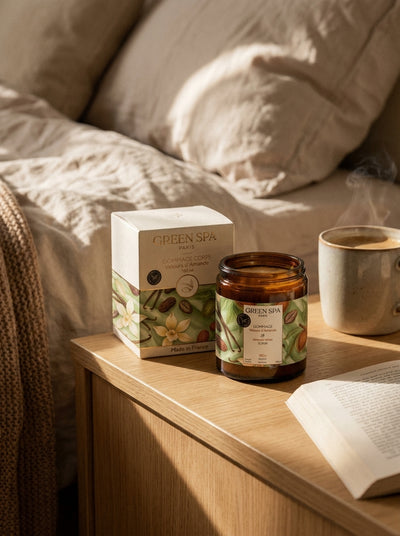
Professional massage products: 2026 field guide
Choosing professional massage products: quality criteria, textures, regulations, and practical feedback for spas and beauty salons.

In the treatment room, choosing a massage oil is no trivial matter. It is what carries the gesture, determines the fluidity of the protocol, and remains on the clients' skin sometimes for several hours. After years of testing, comparing, observing skin reactions and field feedback, one develops a kind of radar. Some reflexes become second nature. Other certainties are shattered. Today, knowing how to choose a massage oil relies on a combination of technical requirements, practical common sense, and regulatory vigilance.
First thing: the composition. We always look at the INCI label. First cold-pressed vegetable oils (sunflower, jojoba, hazelnut, sweet almond) offer a neutral and stable base. They glide well, penetrate slowly, and respect the skin barrier.
In the field, here is what really matters:
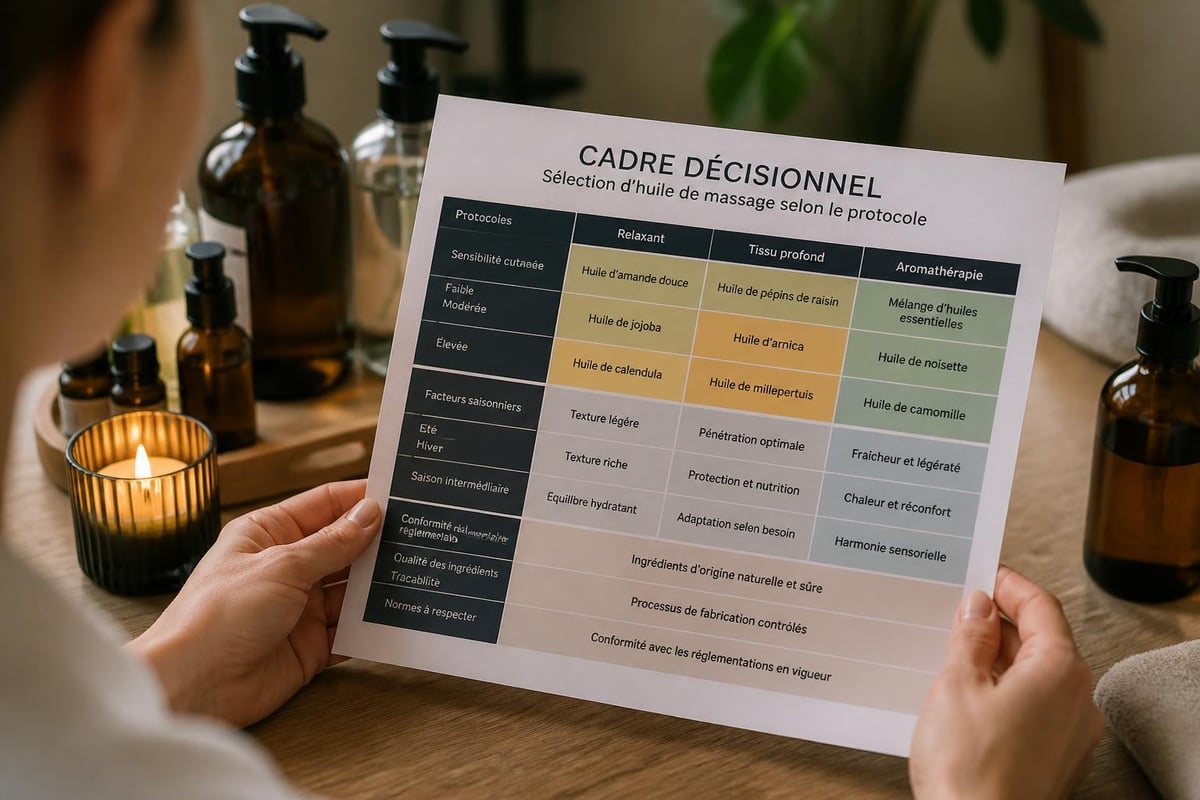
In the treatment room, we rarely work with a single reference. You often have to juggle several textures depending on the type of massage, the season, the client's profile.
Organic, Cosmos, Ecocert, Nature & Progrès… labels reassure, but they do not tell everything. A certified organic product remains a cosmetic product subject to European regulations. Consulting the CosIng database allows you to check usage restrictions, maximum authorized concentrations, and contraindications.
In practice, a label mainly guarantees traceability, the absence of synthetic pesticides, and compliance with certain specifications. But it does not replace the test in the treatment room. An oil can be organic and glide poorly, smell too strong, or leave an unpleasant greasy film.
| Criterion | Organic label | Conventional product | Field impact |
|---|---|---|---|
| Ingredient traceability | High | Variable | Client confidence |
| Allergen risk | Medium (essential oils) | Medium (synthetic fragrances) | Mandatory anamnesis |
| Formula stability | Good if well preserved | Often better (synthetic antioxidants) | Stock rotation |
| Marketing image | Strong | Neutral or technical | Retail resale |
A Californian massage does not require the same texture as a lymphatic drainage or a hot stone massage. For deep work, we favor a light, almost dry oil that does not hinder the grip on the tissues. For a long and enveloping effleurage, a richer, more covering formula prolongs the touch.
The client's skin also dictates the choice. Dry, mature skin: hazelnut, argan, rosehip oil (in small proportions). Oily or combination skin: jojoba, macadamia, oleic sunflower. Sensitive skin: we stick to simple bases, lightly loaded with active ingredients, without essential oils if possible.
In thalasso or a hotel spa, we see many different profiles. Some clients arrive with medical history (eczema, psoriasis, allergies), others under medication. The anamnesis then becomes decisive. The Vigil'Anses sheet on essential oils reminds us that certain molecules (ketones, phenols) present risks of neurotoxicity or contact dermatitis. In the treatment room, we do not play with that.
Some oils display an endless list of ingredients: macerates, extracts, vitamins, natural preservatives. Sometimes it is relevant, sometimes it is marketing. The more loaded the formula, the greater the risk of sensitization, especially if the client accumulates several treatments in one day.
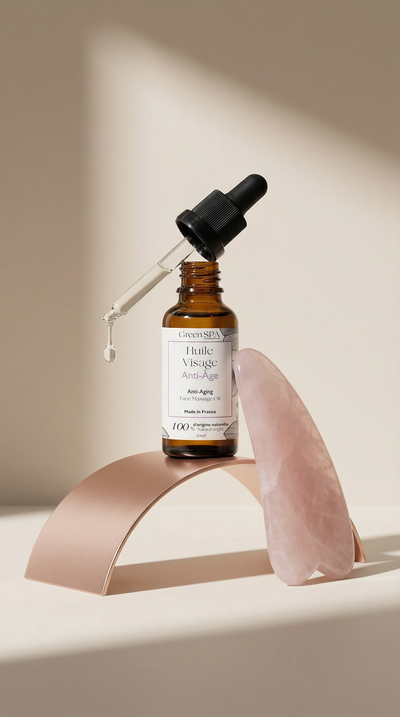
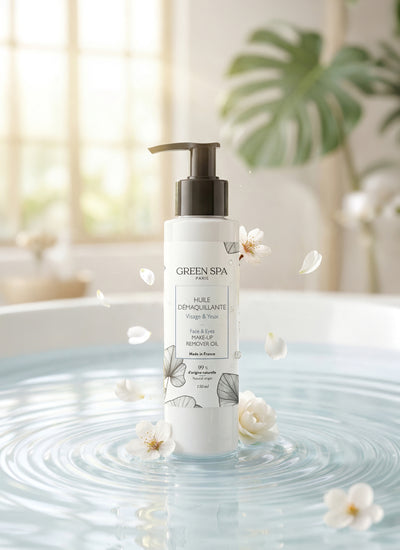
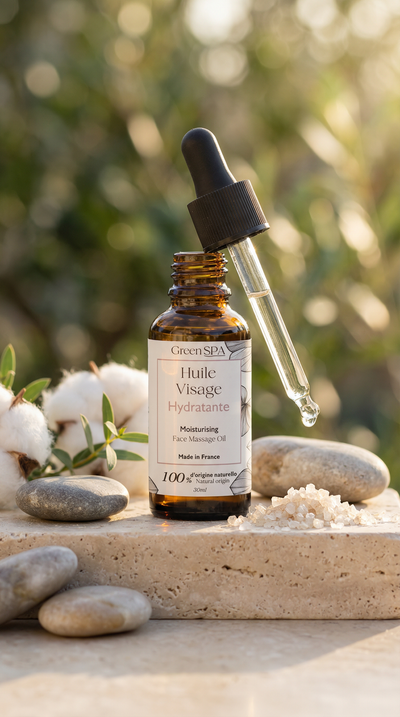
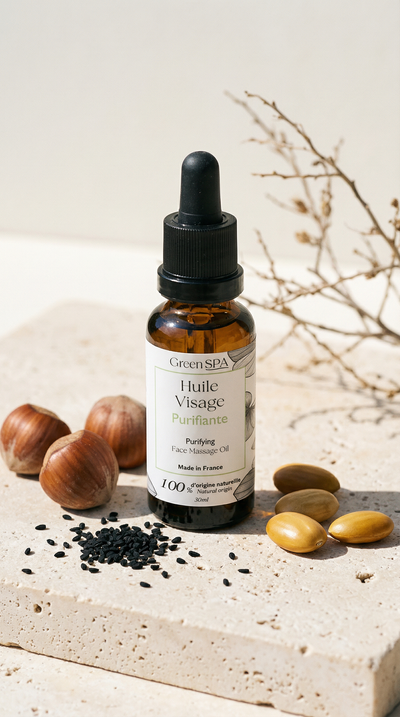
We often prefer a simple, well-formulated base, stable over time. At Green Spa, this logic of controlled compositions is found in all ranges intended for professionals.
For a few years, institutes have been trying to differentiate themselves through scent. Signature oils are becoming an asset to create an identity, a sensory memory. The Signature Oil: The Precious Orchid illustrates this trend well: a light, rounded floral fragrance that envelops without saturating, and which prolongs the experience long after the treatment. This type of product works particularly well in retail resale, because it anchors the emotion of the massage in a bottle that the client can take home.
But beware: offering a scented oil does not exempt you from keeping one or two neutral references in the treatment room. Some clients react poorly to fragrances, natural or not. Others simply prefer a massage without a strong odor.
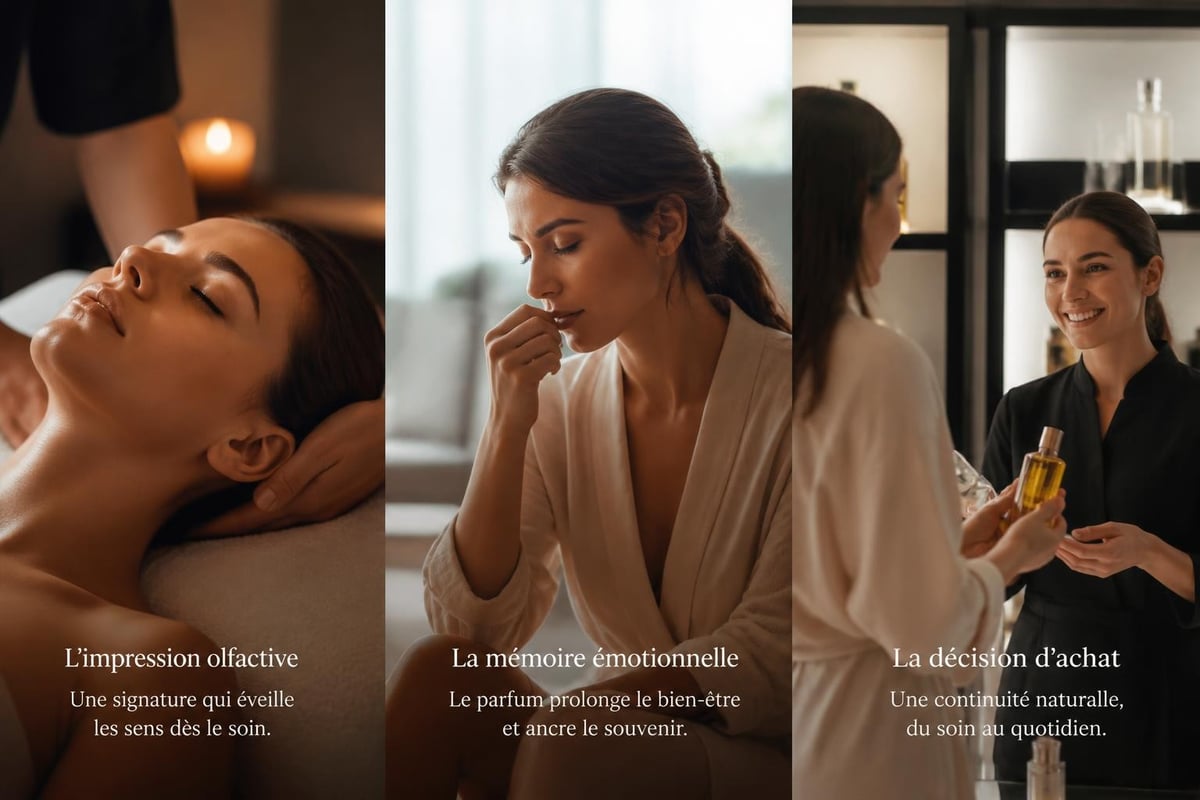
A good choice of massage oil is also a merchandising choice. If the oil used in the treatment room is liked, if it leaves a pleasant sensation, the client will naturally be tempted to buy it again. That is where the quality of the formula and the transparency of the composition play their role. The COSMILE Europe database offers a useful resource to explain to clients the function of each INCI ingredient.
In the treatment room, we find that clients rarely buy an oil they have not tested on their skin. The treatment therefore becomes a living demonstration. If the texture sticks, if the smell bothers, if the skin feels tight in the evening, the sale will not happen. Conversely, a successful experience in the treatment room often leads to an immediate purchase.
We still see too often institutes that change oils every six months, attracted by a promotion or a novelty. Result: regular clients lose their bearings, stocks linger, some references go rancid. It is better to choose two or three reliable oils and really master them: texture, dilution, possible combinations with other products on the treatment menu.
Another trap: underestimating training. Using essential oils without knowing their contraindications is taking an unnecessary risk. The ANSM national form specifies the maximum dilutions, usage restrictions, and precautions for use. This is not wasted time, it is earned safety.
Finally, neglecting storage. A vegetable oil, even organic, degrades in light, heat, and contact with air. We store the bottles away from light, note the opening dates, and monitor the smell and appearance. A rancid oil causes irritation and skin reactions, sometimes severe.
| Mistake | Consequence | Field solution |
|---|---|---|
| Frequent brand changes | Loss of consistency, expired stocks | Stable range, 2-3 tested references |
| Hazardous dilution of essential oils | Risk of dermatitis, client complaints | Respect ANSM protocols |
| Inappropriate storage | Rancidity, oxidation | Opaque bottle, stable temperature |
| No prior allergy test | Immediate reaction in the treatment room | Anamnesis + elbow crease test if in doubt |
As professionals, we assume our responsibility with every treatment. A cosmetic product must comply with European regulations, have a complete DIP (Product Information File), and respect good manufacturing practices. All ingredients must appear in the official INCI nomenclature, available via the European Commission CosIng guide.
If we make our own mixtures in the treatment room, we step outside the classic cosmetic framework and enter a gray area. It is better to rely on serious suppliers, who assume legal responsibility and provide technical data sheets, certificates of analysis, and safety assessments.
The French Society of Dermatology also offers useful resources to understand skin reactions, tolerance tests, and good practices regarding cosmetics applied to damaged or sensitive skin. This type of monitoring helps to refine the choice of products and anticipate problems.
In the field, the best way to know how to choose a massage oil remains observation. We note the reactions, ask clients at the end of the treatment, and compare textures with each other. Some oils glide perfectly on wet skin after exfoliation, others emulsify poorly. Some leave an immediate satin finish, others require a few minutes to absorb.
The scientific syntheses on massages remind us that the effectiveness of a treatment does not depend solely on the gesture, but also on the quality of the products used, their safety, and their sensory acceptability. Choosing a massage oil is therefore also choosing a work tool that conditions the overall success of the protocol.
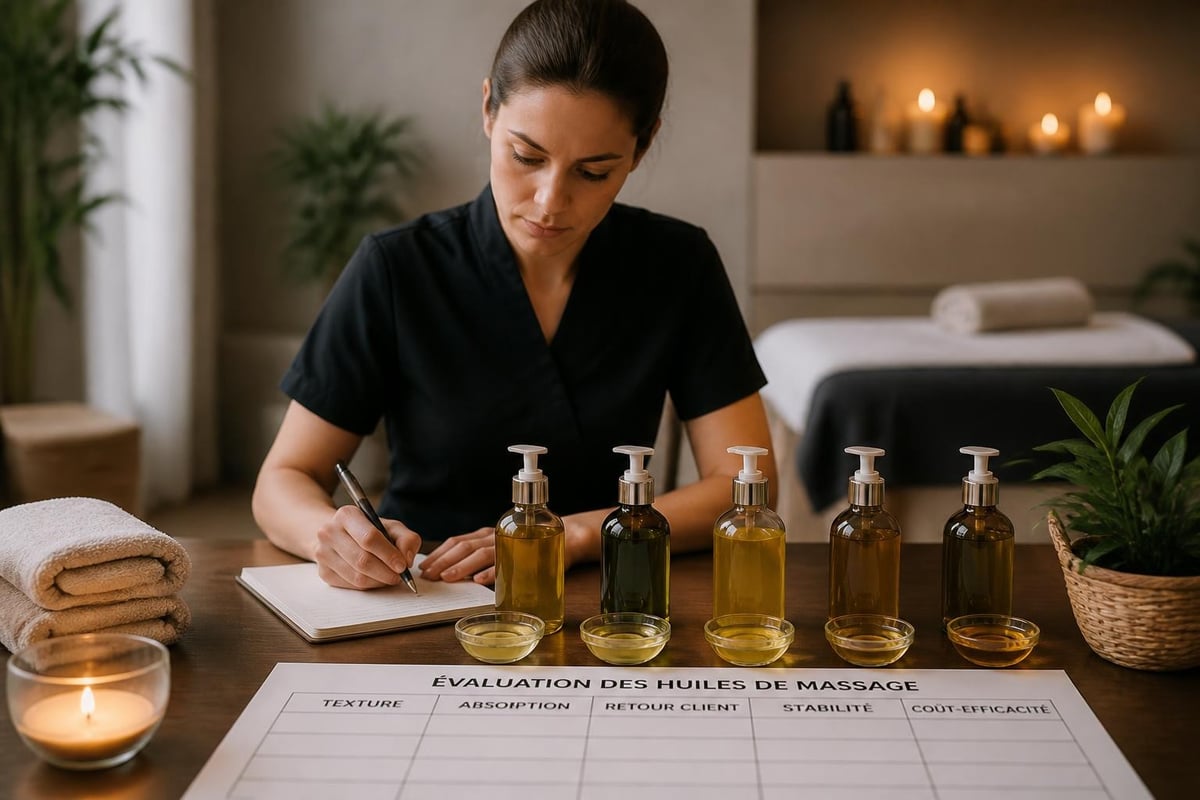
Knowing how to choose a massage oil is built over time, through practice, listening to clients, and constant monitoring of regulations. Every treatment room, every institute develops its own guidelines, but some fundamentals remain universal: clear composition, skin tolerance, consistency with protocols, guaranteed traceability. If you are looking for professional massage oils, designed in France with a requirement for quality and durability, explore the Green Spa range and discover formulas designed for spas and institutes that refuse compromise.