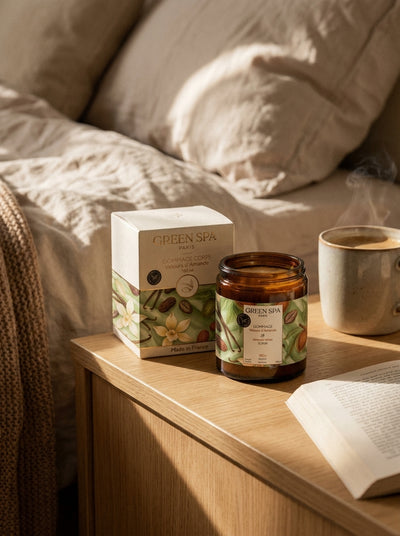
How to choose a massage oil? Professional guide
Discover how to choose a massage oil suited to your practice: technical criteria, compositions, and pitfalls to avoid in the treatment room.

After years spent in the treatment room, I realized one essential thing: knowing how to give a relaxing massage cannot be improvised. It is a combination of gestures, intentions, and details that, when put together, create that suspended moment where the client truly lets go. No magic. Just method, listening, and a good dose of presence. Here is what I have learned in the field.
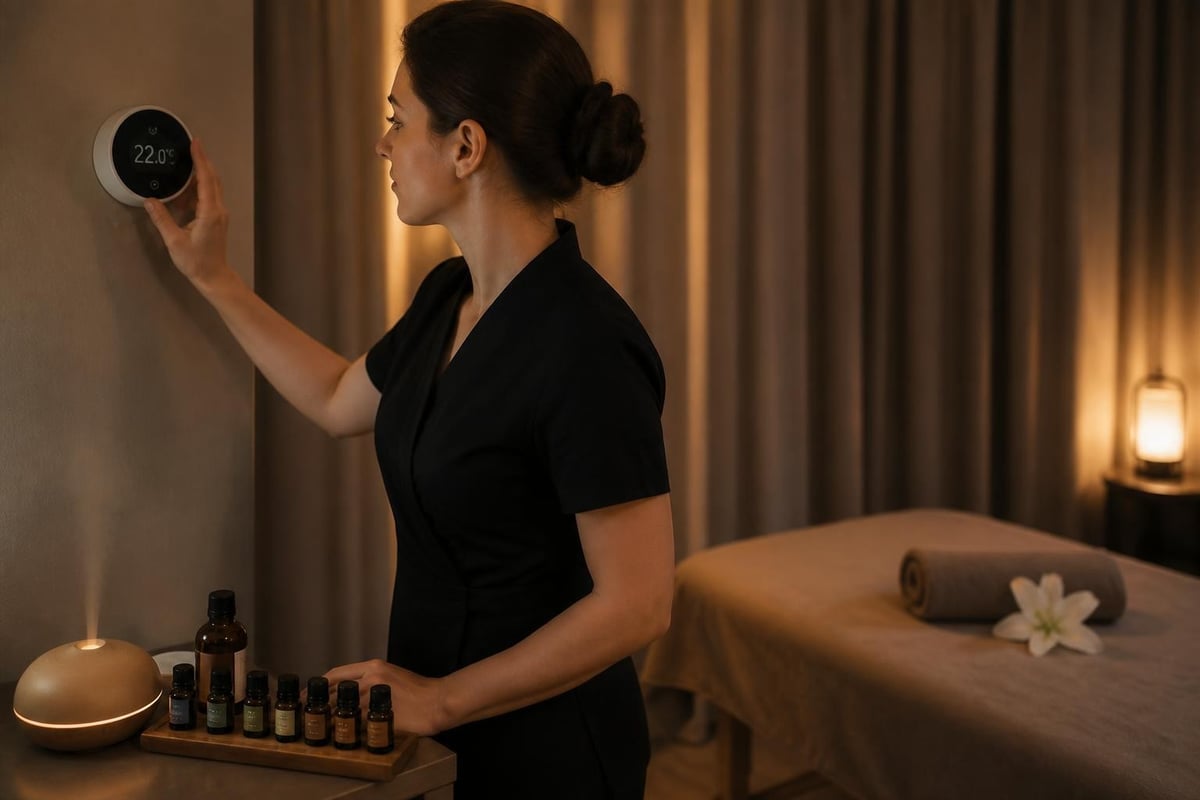
Even before touching the client, you must prepare the treatment room.
Temperature matters. Really. Between 22 and 24 degrees is often the sweet spot. Too cold, and the body tenses up. Too hot, and you sleep poorly.
I have seen elaborate protocols fail simply because the room was cold or noisy. The environment does 50% of the work.
A stable table, firm but not hard. Cushions to adjust the position: under the knees when lying on the back, under the ankles when lying on the stomach. And above all, a quality oil. On this point, there is no compromise.
Knowing how to give a relaxing massage means first mastering a few basic movements. There is no need for 30 different techniques. Three or four well-executed ones are more than enough.
This opening and closing gesture of the protocol. Flat hands, light to moderate pressure, slow and continuous movements. Effleurage prepares the tissues, reassures the client, and establishes contact.
In practice, I always start with the back. Large, accessible, less intimate. Two to three minutes of effleurage allow the client to settle in.
A more tonic technique, where you gently grasp the muscle masses. Particularly effective on the trapezius, shoulders, and thighs. We adjust the pressure according to the tension felt.
| Technique | Preferred area | Pressure | Recommended duration |
|---|---|---|---|
| Effleurage | Back, legs | Light to moderate | 3-5 min |
| Kneading | Shoulders, thighs | Moderate | 5-7 min |
| Smoothing | Arms, calves | Light | 2-3 min |
| Pressure | Tense points | Targeted | 30-60 sec |
Using the thumbs or palms, we make slow circles on the contracted areas. Be careful not to dig in. Relaxation is not sports therapy. We are looking for release, not performance.
The scientific evidence on the effectiveness of massage remains moderate, but in the field, the results are there: relaxed clients, improved sleep, reduced tension.
Crucial point. A poor-quality oil is immediately noticeable. Sticky texture, chemical smell, difficult absorption. The client will not return.
I favor organic plant oils: sweet almond, apricot kernel, jojoba. Fluid texture, gradual penetration, silky touch. For a relaxing massage, avoid oils that are too thick, such as pure coconut oil.
Adding essential oils requires strict precautions. The ANSM guide on topical mixtures reminds us of the dilution rules and contraindications that should never be overlooked.
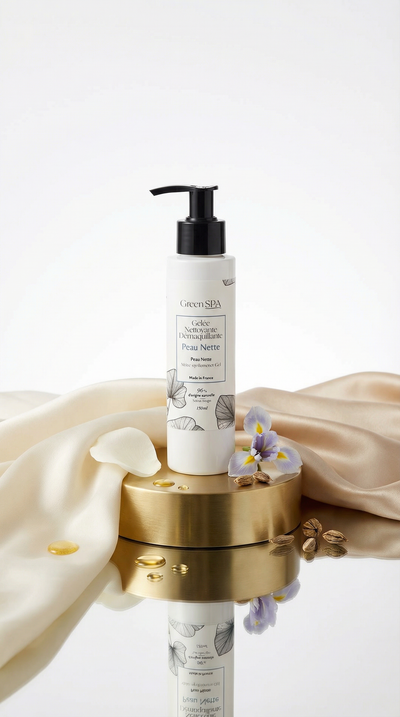
For those looking for a truly high-end signature oil, l'Orchidée Précieuse offers a subtle and spring-like olfactory experience, with light floral nuances that perfectly complement a relaxing protocol without ever overwhelming the senses.
Preheat the oil in the hands before applying. A simple gesture, immediate effect. Quantity: three to four pumps of the bottle for a full back. Readjust according to absorption.
This is the real skill: knowing how to give a relaxing massage for this specific person, at this given moment.
A few questions at the beginning of the session:
The recommendations of the Order of Physiotherapists emphasize the importance of gathering information, even in a wellness context.
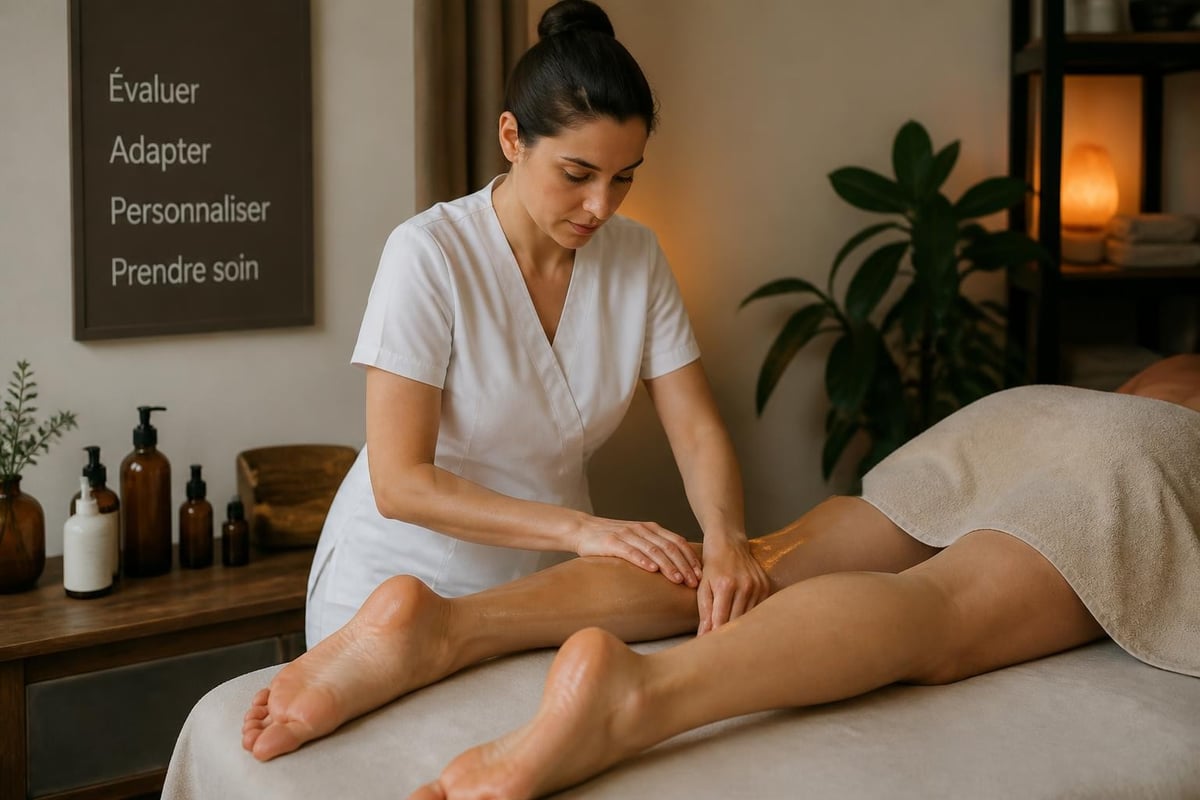
Observe the client's breathing. If it remains shallow and ragged after ten minutes, slow down the movements even further. If the body relaxes quickly, maintain the pace.
Sometimes, less technique and more presence make all the difference.
A serious subject. A relaxing massage remains a manual act that influences the body.
The IGAS report on the safety of cosmetic products highlights the importance of traceability and the quality of the products applied.
An effective relaxing massage lasts between 45 and 90 minutes. Shorter, and the body does not have time to switch over. Longer, and the effect may diminish.
Recommended frequency: once a week during periods of intense stress, twice a month for maintenance.
The hardest element to teach. Pace is not measured in BPM. It is felt.
Fast movements stimulate. Slow movements soothe. For a relaxing massage, aim for 5 to 8 seconds per full pass over an area.
Regularity too: same pressure, same amplitude, same tempo. The body lets go when it can anticipate correctly.
An advanced but effective technique: timing certain movements with the client's breathing. Downward effleurage on the exhale, upward on the inhale. Subtle but powerful.
The NICE recommendations mention the benefit of combining manual techniques with attention to breathing.
We often forget this aspect. Yet, it is essential.
Wash before and after each treatment. Short nails, no nail polish. Jewelry removed. Professional standards insist on these details that protect both client and practitioner.
Straight back, knees slightly bent, using body weight rather than arm strength. After eight years in the treatment room, I can testify: poor posture takes its toll by the end of the day.
| Common error | Consequence | Correction |
|---|---|---|
| Hunched back | Lower back pain | Table at the right height |
| Extended arms | Neck tension | Move closer to the table |
| Pressure on thumbs | Tendinitis | Use palms and forearms |
Between each area, maintain contact. One hand remains placed while the other moves. Never break contact abruptly.
Moving from the back to the legs, from the arms to the face: these transitions tell the story of the protocol's fluidity. A good relaxing massage ends as gently as it began.
End of effleurage, hands gradually lightening, a few seconds pause before breaking contact. Then let the client return to their own pace.
Knowing how to give a relaxing massage requires practice, observation, and a real demand for the products used. Every detail counts: from preparing the treatment room to choosing the oils, and constantly adapting to the client. Green Spa supports wellness professionals with high-end organic cosmetics made in France, designed to create authentic and respectful sensory rituals. Discover how to elevate your protocols with products that truly make a difference.